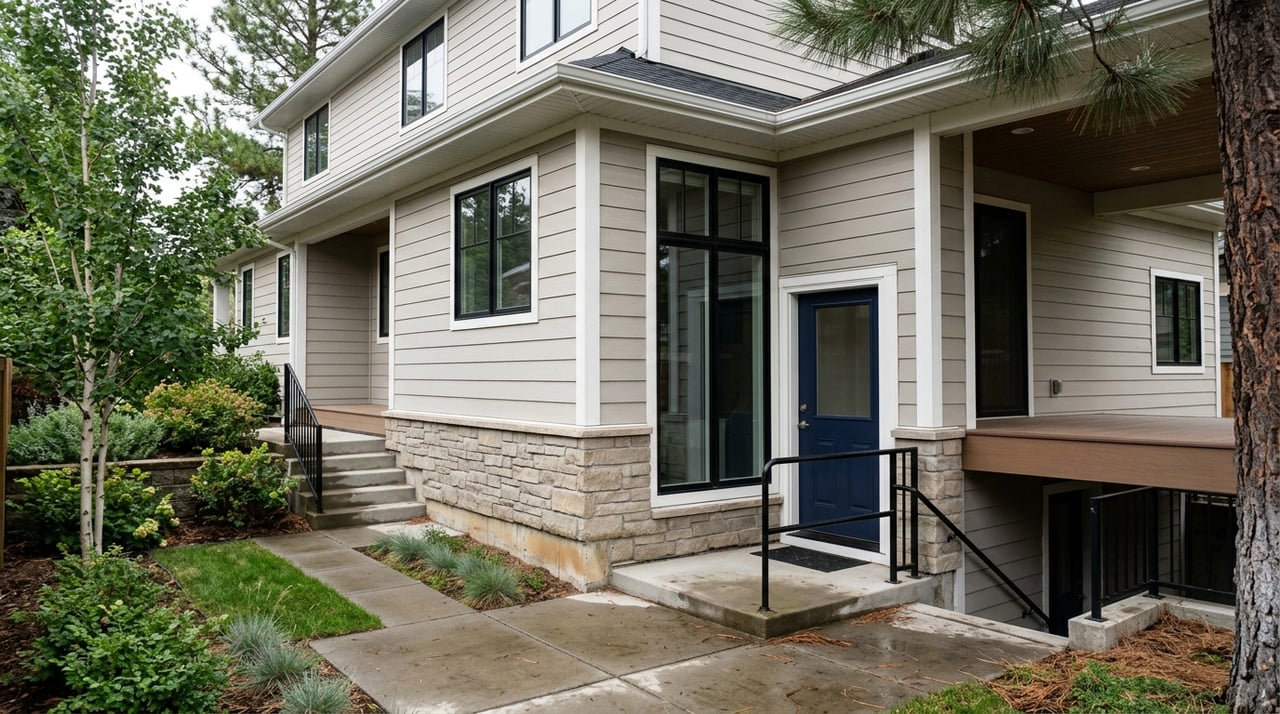
Wondering whether one home can really work for aging parents, adult kids, or extended family in North Spokane County? You are not alone, and the answer is often yes, but only with the right layout, the right property, and a clear understanding of local rules. If you are planning for multigenerational living in North Spokane County, this guide will help you think through space, zoning, permits, parking, septic, and financing before you make a move. Let’s dive in.
Why jurisdiction matters first
The first question is not always about bedrooms or square footage. In North Spokane, you need to know whether the property is in the City of Spokane or unincorporated Spokane County because each uses different accessory dwelling unit, or ADU, rules.
That distinction matters even more now because Spokane City adopted updated ADU regulations on June 2, 2025, with an effective date of July 11, 2025. If you are comparing homes or thinking about converting space you already own, the location of the property can shape what is possible.
What multigenerational living often needs
A successful multigenerational setup usually does more than add another bedroom. The goal is often to give everyone enough privacy to live comfortably while still sharing one property.
In many cases, the most practical design includes a separate entrance, a private sleeping area, a bathroom, and a kitchen. That lines up with the standard definition of an ADU, which requires independent living, sleeping, cooking, and bathroom facilities.
It also helps to think about daily routines. Separate laundry, better sound separation, and an easy path from parking to a private entrance can matter more than cosmetic upgrades.
Layouts that often work best
Basement and interior suites
Basement apartments, attic suites, and internal conversions are often the simplest starting point for multigenerational living. Spokane City allows ADUs to be created by converting existing living area, attic, basement, or garage, and Washington law counts basements and attics in gross floor area.
For many North Spokane households, a daylight basement can be especially useful. It can create a more private living zone while keeping the main floor for shared meals, gathering space, and daily routines.
A basement conversion can be a strong option if you want to stay in your current home instead of buying a larger one. Still, extra finished space is not automatically a legal ADU, so permit and building requirements need to be verified early.
Detached cottages and shop apartments
Detached ADUs can be appealing if you want more separation between households. On larger North Spokane County lots, a detached cottage or shop apartment may be possible, but the rules are often tighter than buyers expect.
In Spokane County, detached ADUs are allowed only in certain residential zones, may be limited to one per lot with an existing single-family residence, and in the cited county standards are capped at two bedrooms and 800 square feet on the ground floor with a maximum ridge height of 24 feet. Those limits can affect whether a detached plan fits your goals.
If you are thinking about converting a shop or detached structure, the key question is whether it can be legally converted under zoning, utility, and building standards. In Spokane City, if floor area is added to a detached accessory structure to accommodate an ADU, the entire structure must meet the underlying zoning development standards.
Attached additions
An attached ADU can be a middle-ground option when you want separation without building a completely detached unit. In Spokane County, attached ADUs must remain subordinate to the main home and may not exceed 35% of total livable floor area or 900 square feet.
That means attached space can work well for one or two people, but the size cap may limit larger plans. If you are shopping for a home with future flexibility, it helps to compare the existing layout against these standards before you commit.
Spokane rules to verify early
Spokane City ADU basics
In the City of Spokane, the updated ordinance allows two ADUs per lot in the RA, R1, R2, RMF, and RHD zones, subject to the underlying development standards. The city also requires a building permit and certificate of occupancy for an ADU.
That can create more flexibility than many buyers expect, but it does not mean every lot will qualify. Zoning, lot conditions, and development standards still need to be checked.
Spokane County ADU basics
In Spokane County, the standards are different and often more limiting. County rules in the cited standards include size restrictions for detached ADUs and require one off-street parking space for an attached ADU in addition to the main residence.
County entrance standards also call for side- or rear-oriented entrances that are unobtrusive from the street. If you are evaluating a property for long-term multigenerational use, these details can shape both design and cost.
Parking, septic, and site limits
Parking deserves early attention because city and county standards are not the same. Spokane City routes parking through its parking chapter, while Washington law says cities generally may not require off-street parking for ADUs within one-quarter mile of a major transit stop, subject to limited exceptions.
County properties can bring a different issue to the surface: septic capacity. State law makes clear that ADUs are not automatically allowed everywhere, especially where development is restricted because of on-site sewage infrastructure, critical areas, or other unsuitable physical characteristics.
That is especially important in North Spokane County, where some properties rely on septic systems. Spokane Regional Health District permits new on-site sewage systems and changes to existing systems, and it requires ongoing operation and maintenance records for on-site systems.
Should you reconfigure or buy differently?
If you already own a home, reconfiguring the existing layout may be the most direct path. A basement, attic, or interior conversion can sometimes create the privacy your household needs without the cost of a full addition or detached build.
If you are still house hunting, it may make more sense to buy with the future in mind. Lot size, zoning district, sewer versus septic, parking, and the likely location of a private entrance can all affect whether a property will truly support multigenerational living.
In practical terms, some homes look spacious but are hard to adapt. Others may have a simpler footprint, a daylight basement, or a lot configuration that makes a second living area far more realistic.
Financing and budget points to plan for
Financing can work for ADU-related plans, but the details matter. Fannie Mae says ADUs can be financed with Selling Guide products including HomeStyle Renovation for adding an ADU, Construction-to-Permanent financing for a new home with an ADU, and HomeReady for qualifying borrowers purchasing or refinancing a home with an existing ADU and using rental income to help qualify.
There is an important limit to remember. Fannie Mae also says properties with multiple ADUs are ineligible for Fannie Mae financing.
FHA also allows a one-unit property with a single ADU to remain a one-unit property, and FHA may consider ADU rental income when properly documented. FHA does not allow ADU rental income to be used as effective income for a cash-out refinance.
If your plan depends on projected rent, documentation standards become very important. FHA requires an appraisal and, depending on the situation, lease or market-rent documentation, and Fannie Mae also relies on appraisal and rent support for ADU income.
Your budget should also include operating costs, not just construction. Spokane County says ADUs are billed at 60% of the rates for a single-family residence for sewer service, and septic properties may also need inspections, capacity review, or upgrades before occupancy.
A practical checklist before you decide
Before you move forward, it helps to narrow your planning around a few core questions:
- Is the property in Spokane City or Spokane County?
- What zoning applies to the lot?
- Is the home on sewer or septic?
- Would the space be an attached, interior, or detached ADU?
- Is there a workable location for a private entrance?
- What parking standards apply?
- Will the project need projected rental income to support financing?
- Does the existing structure need major upgrades to meet code?
These answers can help you avoid falling in love with a plan that does not fit the property. They can also help you identify homes with real flexibility before you buy.
How local guidance helps
Multigenerational planning is rarely just about square footage. It is about matching your family’s needs with the right property, the right jurisdiction, and a realistic path through permits, site conditions, and financing.
That is where local market knowledge matters. When you are comparing homes in North Spokane, North Spokane County, or nearby areas, it helps to work with someone who can spot the layout and property features that may support your goals from the start.
If you are weighing whether to buy, sell, or reconfigure for multigenerational living, Katie McDaris Marks can help you evaluate your options with clear, locally informed guidance.
FAQs
What does multigenerational living usually require in North Spokane County?
- A workable setup often includes a separate entrance, private sleeping area, bathroom, and kitchen, along with attention to parking, zoning, and utility or septic constraints.
Can a basement become a legal suite in North Spokane?
- Sometimes, yes. A basement may be a strong candidate for conversion, but it still has to meet local building and permit standards before it can function as a legal ADU.
Can you convert a shop into a family apartment in Spokane?
- Often yes in concept, but only if zoning, setbacks, utilities, and building-code requirements can all be met. In Spokane City, adding floor area to a detached accessory structure for an ADU triggers a full standards review.
How many ADUs are allowed on a Spokane City lot?
- Under the updated Spokane City ordinance, two ADUs per lot are allowed in the RA, R1, R2, RMF, and RHD zones, subject to underlying development standards.
What parking rules apply to an ADU in Spokane County?
- In the cited Spokane County standards, an attached ADU requires one off-street parking space in addition to the main residence.
Does septic affect multigenerational living plans in North Spokane County?
- Yes. Properties with on-site sewage systems may face limits based on septic capacity, permitting, and ongoing maintenance requirements, so this should be reviewed early.
Can projected ADU rent help with financing in Spokane-area purchases?
- In some cases, yes. Fannie Mae and FHA may allow ADU income when it is properly documented, but appraisal and rent-support requirements apply, and program limits vary by loan type.