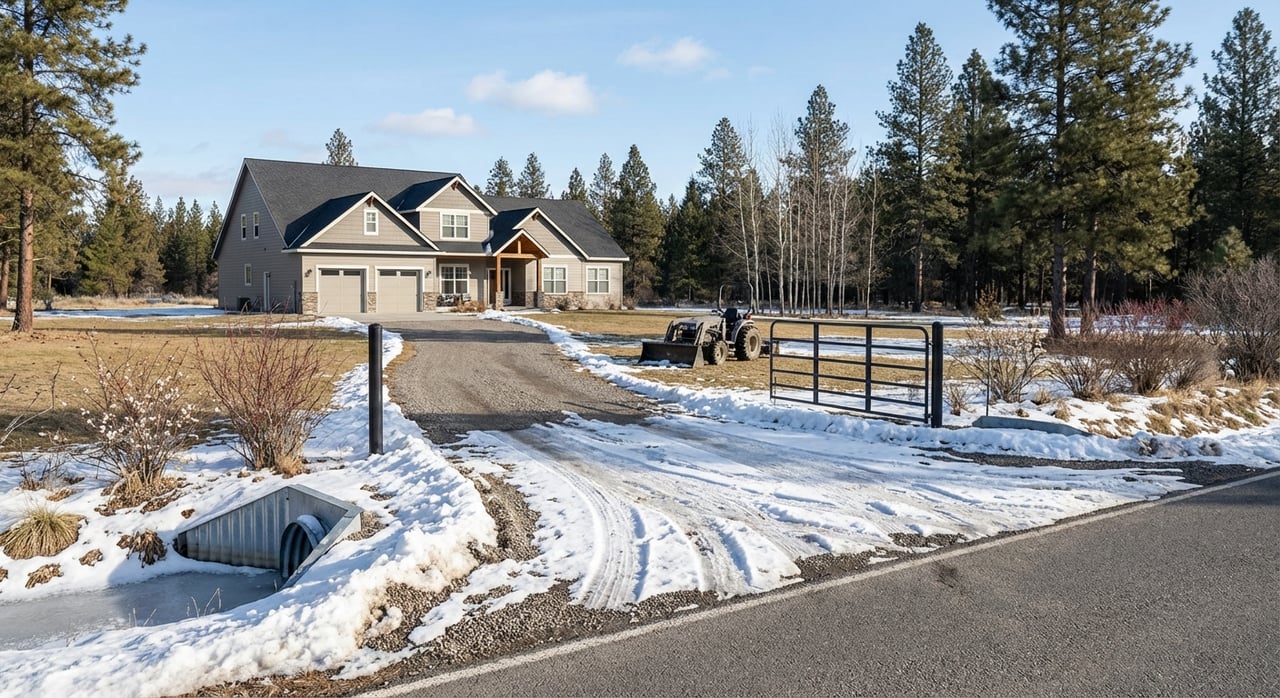
Dreaming of a little more elbow room north of Spokane? Acreage living can give you privacy, space for gardens or animals, and quick access to the outdoors. It also comes with fine print around zoning, wells and septic, road maintenance, utilities, and wildfire prep. This guide walks you through the realities so you can decide if the North Spokane County lifestyle fits your plans. Let’s dive in.
Why acreage north of Spokane appeals
You get room to spread out, quiet nights, and the freedom to build projects and hobbies into daily life. Many buyers love the ability to plant large gardens, add a shop, or enjoy views without close neighbors. Trails, lakes, and open spaces are nearby too.
Here’s the practical side you should confirm early. Utility hookups like city water, sewer, and natural gas may not be available. Private wells and septic are common and add cost and time. Private roads and long driveways are often owner maintained, including snow clearing. Broadband speeds and emergency response times vary by parcel. County and health district resources can help you vet each point before you commit.
Zoning basics: what you can do on your land
Outside the Urban Growth Area, Spokane County’s rural zones commonly require larger lot sizes, often five acres or more. Do not assume what you can build or keep on a property until you confirm the zoning. Start with the county’s parcel tools and the Spokane County Land Use page to identify zoning and allowed uses.
For exact standards like setbacks, frontage, and minimum lot area, county codes and zoning maps control. If you plan to keep animals, add a shop, or divide land in the future, verify those uses with the county before you write an offer. Also check title documents for any recorded covenants or easements that might limit where you can build.
Critical areas and buildable space
Critical areas such as wetlands, riparian buffers, steep slopes, and aquifer recharge zones can limit your buildable area. On acreage, this often affects where you can place your home, route a driveway, and site a drainfield and reserve area. Use county maps and staff guidance to understand any constraints early.
Animals, shops, and subdividing
Rules for livestock, accessory buildings, and further subdivision depend on zoning and any private covenants. The county can confirm zoning and permitted uses, while your title review uncovers recorded restrictions. If flexibility is important, verify both before moving past your inspection window.
Water and septic: the must-know details
Many rural parcels rely on a private well and an on-site septic system. These systems work well when designed and maintained, but they require due diligence and long-term planning.
Septic: design, permits, and records
Septic systems are permitted and inspected through the Spokane Regional Health District. New systems require a site and soil evaluation, a design, and a designated reserve area for future replacement. Before you buy, confirm whether the lot can support a conforming system and whether any existing system has as-built records. The SRHD On-site Sewage program explains permitting, inspections, and maintenance.
Wells: water availability and quality
If a property has a private well, pull historical well logs and plan to test the water. Some local wells show elevated arsenic or uranium, and testing for coliform bacteria and nitrate is a smart baseline. Review SRHD’s testing guidance for private wells and order lab tests during your inspection period. You can also look up nearby well construction reports using the Washington State well report viewer and consult SRHD guidance for private wells for local considerations.
If no well exists, ask a well driller about feasibility and likely depth before you commit. If you plan substantial outdoor irrigation or high water use, check with the county and state about any basin-specific water-right or mitigation requirements.
Access, roads, and winter reality
Spokane County maintains an extensive public road network and clears snow by priority, focusing first on major arterials. The county does not plow private roads or driveways. Plan for a plow contractor, a heavy snow blower, or equipment if you have a long driveway. See the county’s Winter Roads and Snow Response for how crews prioritize routes and what owners are responsible for.
Driveway permits and culverts
If your access crosses a county right-of-way or needs drainage work, you may need an access or right-of-way permit, and culverts must meet county standards. Start with the Spokane County permit portal to understand what applies to your parcel. Ask the seller how access and drainage have been handled and who maintains any shared private road.
Seasonal weight restrictions
Freeze-thaw cycles can trigger seasonal weight limits on certain roads, which can affect deliveries and construction timing. Check the county’s notices for current seasonal weight restrictions and plan heavy deliveries accordingly.
Utilities, broadband, and services
Power, gas, and propane
Avista is the primary electric and natural gas utility for much of the Spokane area, while Inland Power & Light serves some rural pockets. Confirm which provider serves your address and whether line extensions are needed. New service or long extensions can add cost, so request construction estimates early. Start with Avista Utilities.
Internet and cell coverage
Broadband availability varies widely by address. Some locations have cable or fiber, while many acreage homes rely on fixed wireless or satellite. Check address-level availability with providers and use Broadlinc’s broadband resources for planning tools. Also test your mobile carrier’s signal at the property before you decide.
Solid waste and mail
Rural residents often subscribe to a private hauler or use county transfer stations, depending on location. For mail, delivery to the door vs. a roadside cluster box varies by route. Ask the local post office about mailbox placement and delivery details for your exact address.
Safety, wildfire, and emergency services
Unincorporated North Spokane County is covered by multiple fire districts, and response times can vary by station and staffing. Identify the fire district for any parcel you are considering and ask about insurance impacts. Many acreage homes sit in the wildland-urban interface, so creating defensible space, hardening your home, and making your address visible from the road are important. Start with the county’s Spokane County Fire Safety page to find your district and local preparedness resources.
Budgeting and maintenance to expect
Plan for snow clearing on private driveways, plus grading and regraveling for longer gravel lanes over time. Culverts and drainage may need periodic work. Septic systems require ongoing pumping and inspections, with eventual drainfield replacement expected over decades. If utilities need to be extended, get quotes early so there are no surprises.
Your due diligence checklist
Use this quick checklist to evaluate acreage north of Spokane like a pro:
- Zoning and parcel basics: Confirm zoning, minimum lot size, setbacks, critical areas, and whether the property is inside the Urban Growth Area using Spokane County Land Use.
- Septic: Request SRHD permit history and as-built records, and verify space for a conforming drainfield plus a reserve area. See the SRHD On-site Sewage program.
- Well and water: Pull nearby well logs via the Washington State well report viewer and order lab tests for coliform, nitrate, and arsenic. Review SRHD guidance for private wells.
- Access and winter: Determine if the road is county maintained or private, who pays for private-road upkeep, and how snow is managed. Review Winter Roads and Snow Response.
- Driveway permits: If access or drainage changes are needed, confirm requirements at the Spokane County permit portal.
- Utilities: Ask providers about electric, gas, and any line-extension costs. Start with Avista Utilities.
- Broadband and cell: Check address-level options and speeds using tools from Broadlinc’s broadband resources, then verify with providers.
- Fire district and insurance: Identify the fire district, ask about wildfire mitigation programs, and confirm typical premiums via the Spokane County Fire Safety page. Also note any seasonal weight restrictions that could affect move-in or construction timing.
Ready to explore acreage with a clear plan? Let’s talk through your must-haves, timeline, and the parcels that fit your goals. Reach out to Katie McDaris Marks to Schedule a Consultation.
FAQs
What should I confirm before buying acreage north of Spokane?
- Verify zoning and allowed uses, septic feasibility or records, well logs and water quality tests, road maintenance and snow plans, utility availability, broadband options, and the serving fire district using the county and SRHD resources linked above.
How do I check a rural property’s septic system in Spokane County?
- Ask for SRHD permit history and as-built drawings, schedule a licensed inspection if needed, and confirm space for both a working drainfield and a required reserve area per the SRHD On-site Sewage program.
Who handles snow plowing on private roads and driveways?
- Property owners or private road groups typically handle it, not the county; see the county’s Winter Roads and Snow Response for public-road priorities and owner responsibilities.
How can I verify well water and local contaminants near Spokane?
- Pull nearby well reports using the Washington State well report viewer and order lab tests for coliform, nitrate, and arsenic following SRHD guidance for private wells.
What internet options are common on acreage in North Spokane County?
- Availability is address specific; some parcels have cable or fiber, while many rely on fixed wireless or satellite—check providers for the exact address and use Broadlinc’s broadband resources to map options and plan speeds.