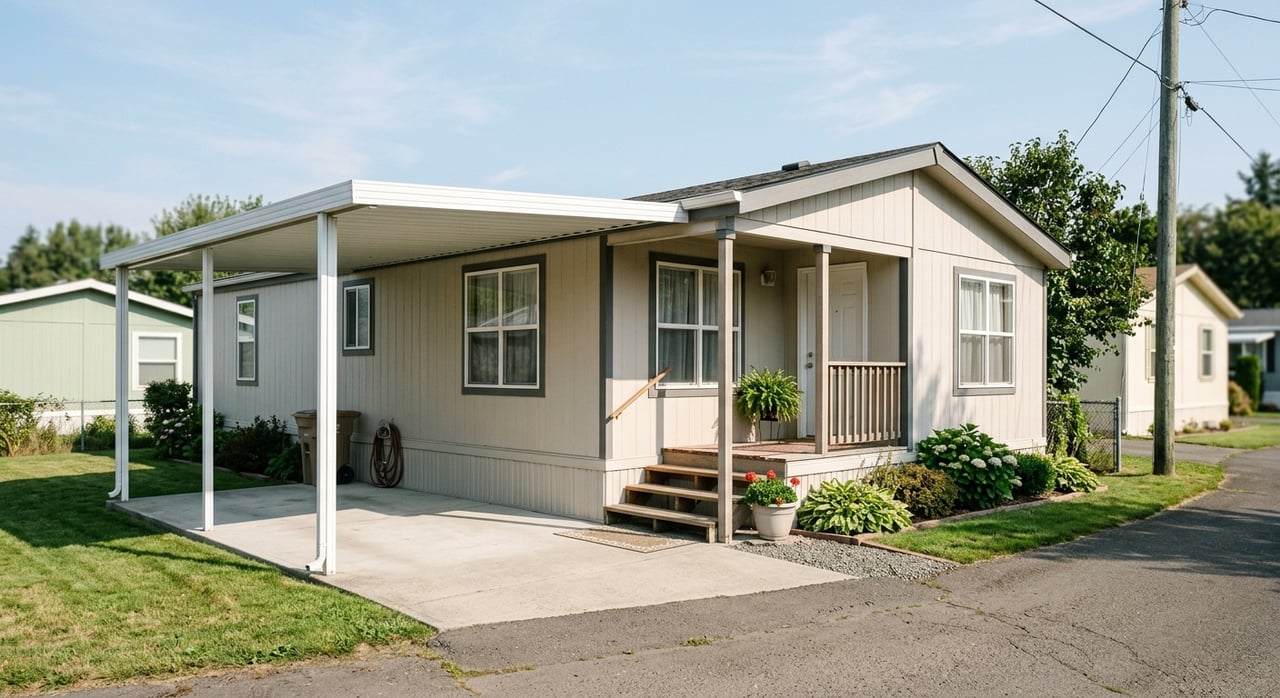
Thinking about buying in a North Spokane County mobile home community? The price tag on the home is only part of the story. If you are looking for a lower-cost path to homeownership or a simpler downsizing option, you also need to understand lot rent, park rules, financing, and how the home is legally classified. This guide will walk you through the key issues so you can make a confident, informed decision. Let’s dive in.
Why this purchase is different
Buying in a manufactured-home community in North Spokane County often means you are buying the home but leasing the space beneath it. That setup can affect your financing, your monthly costs, and your options later if you want to sell or refinance.
In Washington, homes built after June 15, 1976 are generally considered HUD-code manufactured homes, while older units are generally treated as mobile homes, according to the Washington State Department of Revenue. That distinction matters because age, documentation, and legal status can all affect the transaction.
Know the home’s legal status
One of the first things to confirm is whether the home is titled as personal property or recorded as real property. In many mobile home community purchases, the home stays in the personal-property lane because the buyer does not own the land underneath it.
The Washington State Department of Licensing explains that title elimination requires the homeowner to own the land under the home. In a leased-lot community, that usually means the home keeps a title more like a vehicle than a traditional house on owned land.
This may sound technical, but it affects several practical questions:
- What type of loan you can use
- Whether refinancing will be easier or harder later
- What paperwork you need to keep
- How flexible the resale process may be
Compare more than the home itself
In North Spokane County, it helps to think of your purchase as two decisions at once. You are choosing the home, and you are choosing the community lease arrangement that comes with it.
Washington requires manufactured or mobile home communities with two or more spaces for year-round occupancy to be registered with the state. That means you are buying into a regulated rental setting with its own lease, rules, and fee structure, not simply selecting a home in a traditional subdivision.
As you compare options, look closely at:
- Monthly lot rent
- Community rules and renewal terms
- Utility charges and fee schedules
- The home’s title and documentation
- How the community handles sales and approvals
Financing options to review early
Financing can look very different for homes in mobile home communities. If the home remains titled as personal property, the Consumer Financial Protection Bureau says it generally must be financed with a personal-property, or chattel, loan rather than a standard real-property mortgage.
That matters because chattel loans often come with higher interest rates and may offer fewer refinance options. If affordability is your top priority, it is smart to review the full monthly payment, not just the purchase price.
HUD Title I loans
HUD’s Title I program can be used to finance the manufactured home, the lot, or both. For homes on leased land, HUD requires an initial lease term of at least three years and at least 180 days’ written notice if the lease is terminated.
Those lease protections are important when you are buying in a park setting. They can provide more stability than buyers sometimes expect.
VA loan options
The VA purchase loan program can also be used for a manufactured home or lot in some cases. The VA recommends getting a home inspection before closing, which is especially important when you are buying a used home.
For used manufactured homes moved to a buyer’s lot, VA guidance calls for extra review of plumbing, electrical, fuel or heating systems, and roof coating after setup. Even if your situation is simpler, those systems still deserve close attention.
USDA rural options
In eligible rural areas, USDA Rural Housing Service programs may also be worth exploring. USDA has said its guaranteed loan programs can be used with manufactured homes, so some Spokane County buyers may want to compare USDA with FHA and VA-related options.
Housing counseling support
If you are sorting through several loan paths, HUD recommends contacting a HUD-approved housing counseling agency early in the process. This can help you compare loan programs and make sure the payment fits your broader budget.
Park rules and lot rent matter
A lower purchase price can be appealing, but the ongoing lease terms are just as important. Under Washington’s Manufactured/Mobile Home Landlord-Tenant Act, the lot rental agreement must be in writing before move-in, and the original park rules renew automatically for the same length as the original agreement, according to the Washington State Attorney General’s overview of the law.
That means you should read the lease and rules with the same care you would give the purchase contract. You want to know what is expected now and what may continue into future renewals.
Rent increase protections
Washington law currently caps annual lot rent increases for manufactured-home tenants at 5%, bars increases during the first 12 months, and requires 90 days’ written notice before a rent increase. Those protections can help with budgeting, but they do not eliminate the need to plan for rising housing costs over time.
This is why it is helpful to compare total monthly cost, including:
- Loan payment
- Lot rent
- Utilities
- Insurance
- Maintenance
- Any allowed community fees
Fee rules to ask about
Base rent is not the only number that matters. State law also limits certain fees, bars entrance and exit fees, and says utility charges cannot exceed cost. At the same time, rent can change when park property taxes, utility charges, or assessments change.
Before you commit, ask for:
- The full fee schedule
- Written utility rules
- The current lease agreement
- Community rules and regulations
- Any recent notices about rent or fee changes
Resident protections buyers should know
Washington gives residents several important protections that are easy to overlook if you focus only on the home itself. The Attorney General says landlords may not retaliate, interfere with the sale of a resident’s home, or exclude a home solely because of its age.
That last point can be especially helpful for buyers considering older homes. Age alone is not a lawful reason for exclusion, though condition, documentation, and lender requirements still matter.
If a dispute comes up, the state also offers a Manufactured Housing Dispute Resolution Program. This gives homeowners and landlords a lower-cost process for resolving alleged violations of the law.
If the community is sold or closes
Long-term planning matters in a leased-lot purchase. If a community is being sold, Washington law requires a notice of opportunity to compete to purchase before the owner markets the property or accepts an offer.
If a community closes, eligible owner-occupants may receive relocation assistance of up to $11,000 for a single-section home or $17,000 for a multi-section home. These protections are valuable, but they also show why buyers should think carefully about long-term stability when comparing communities.
Inspection checklist for manufactured homes
An inspection is one of the most important parts of the process. The CFPB advises buyers to use an independent inspector, schedule the inspection early, and attend if possible, since major defects can affect both your decision and your financing.
For manufactured homes, special attention should go to the roof, the foundation or anchoring system, and major systems like electrical, plumbing, and heating. These items can directly affect safety, livability, and lender approval.
Find the HUD tag and data plate
HUD says the certification label and data plate are key documents for a manufactured home. The certification label is on the exterior, while the data plate is usually inside a kitchen cabinet, bedroom closet, or near the electrical panel.
The data plate shows wind, snow-load, and roof-load zones. A home should not be placed in a more restrictive zone than the one it was built for, so this is not just paperwork. It can affect whether the home is considered suitable for its location.
If the HUD label is missing, HUD does not reissue it, though IBTS may sometimes verify the label information. Missing labels or missing data-plate details can complicate appraisal or financing, so it is best to check this early.
Paperwork to keep organized
Good records can save you a lot of stress later. The Department of Licensing guidance makes clear that title and recording documents help determine whether the home is treated as personal property or real property.
Keep copies of:
- The title
- The park lease
- The fee schedule
- Utility rules
- Any title-elimination documents
- Any county recording documents
- Inspection reports
These documents can become very important if you sell, refinance, or need to resolve a question about the home’s status.
Think long term before you buy
For many buyers, mobile home communities in North Spokane County can offer a practical path to ownership or downsizing. But the biggest long-term question is not just the condition of the home. It is also the land arrangement underneath it.
Lot rent can rise within the legal cap, park ownership can change, and resale may be more complex if the home remains personal property. According to CFPB research on manufactured housing finance, refinancing and resale can be harder for homes that do not convert to real property.
That does not make these homes a bad choice. It simply means the best buyers go in with clear expectations and strong due diligence.
The three areas to focus on most are:
- Condition of the home and major systems
- Documentation including title, HUD labels, and records
- Lease terms covering rent, fees, and community rules
When you understand those pieces, you can compare opportunities more clearly and avoid surprises after closing.
If you are considering a manufactured or mobile home community purchase in North Spokane County, working with a local agent who understands both the home and the lease side of the transaction can make the process much smoother. If you want thoughtful guidance as you compare options, connect with Katie McDaris Marks to schedule a consultation.
FAQs
What should you review before buying in a North Spokane mobile home community?
- You should review the home’s title status, the park lease, lot rent, fee schedule, utility rules, inspection findings, and HUD label or data plate information before you buy.
How is a manufactured home in Spokane County usually financed on leased land?
- If the home stays titled as personal property, it is generally financed with a personal-property or chattel loan rather than a standard mortgage.
What rent protections apply in Washington mobile home communities?
- Washington law currently caps annual lot rent increases at 5%, bars increases during the first 12 months, and requires 90 days’ written notice before a rent increase.
What inspections matter most for a manufactured home purchase?
- The most important inspection items usually include the roof, foundation or anchoring system, and major systems such as electrical, plumbing, and heating.
What happens if a Washington mobile home community is sold or closes?
- State law requires notice of an opportunity to compete to purchase when a community is being sold, and eligible owner-occupants may qualify for relocation assistance if a community closes.